» Events » Strengthening Multi-Stakeholder Collaboration for Land Governance in Sierra Leone
Strengthening Multi-Stakeholder Collaboration for Land Governance in Sierra Leone
Access to land is vital for food security, livelihoods, and social stability. In Sierra Leone, the multi-stakeholder approach has emerged as a promising pathway to inclusive, fair, and sustainable land governance. The Food and Agriculture Organization of the United Nations (FAO), the Ministry of Lands, Housing and Country Planning (MLHCP), the National Land Commission, and district-level multi-stakeholder platforms are working together to promote peace, justice, and sustainable development. Partnerships2030 supports the development of equitable and effective collaboration among these key actors.
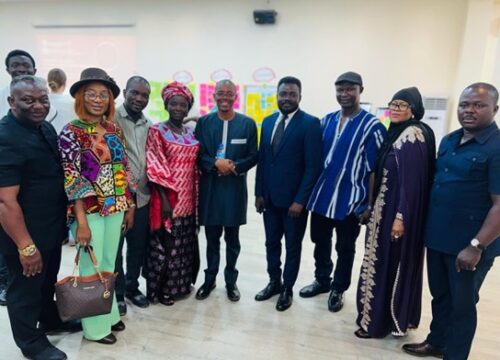
Building on the Voluntary Guidelines on the Responsible Governance of Tenure of Land, Fisheries and Forests (VGGT), Sierra Leone has, in recent years, introduced new and reformed land laws. At both the national and district levels, impactful multi-stakeholder structures have been established to ensure land rights are managed inclusively, fairly, and with reduced conflict potential. In March 2025, a two-day workshop brought together over 70 representatives from government, civil society, traditional authorities, and international organizations. The goal: to reflect on and scale existing structures, exchange knowledge, and strengthen collaboration across national, district, and local levels.
The workshop was organized by MLHCP, the National Land Commission, and FAO, with support from Partnerships2030, Welthungerhilfe, and local organizations such as Land for Life and Green Scenery. Throughout presentations, discussions, and working groups, participants highlighted the progress made so far—including the establishment of nine district-level multi-stakeholder platforms and a nationally active VGGT working group. At the same time, further potential was identified, particularly in strengthening linkages between local, district, and national levels, and in integrating new structures like the National Land Commission and the National Council of Paramount Chiefs.
Dr. Turad Senesie, Minister of Lands, Housing and Country Planning, underscored the importance of collaboration: “The power in the group dynamics should not be underestimated, and the essence is to use land to promote development.”
The participants agreed on concrete next steps to enhance cooperation—a vital contribution to implementing the new land laws and promoting justice, inclusion, and conflict prevention in land governance. The workshop received wide media coverage across TV, radio, and print, with reports praising the commitment of stakeholders and the leadership shown by government institutions.
The conclusion was clear: Sierra Leone’s multi-stakeholder approach is working—and ready for the next phase of development. Key success factors include the strong involvement of relevant stakeholders at all levels, the technical expertise and dedication of the Ministry and National Land Commission, the effective work of implementing organizations such as Land for Life and Green Scenery, and the long-standing, trust-based collaboration with FAO, Welthungerhilfe, and local partners. The willingness of traditional authorities to actively engage has also played a crucial role.
This might also interest you:
●News
When External Funding Ends: An Example from the Sustainable Soy Alliance in Brazil
●News
What Do the New EmpCo Rules Mean for MSPs?
●News
Partnerships2030 Peer Learning Format: Learning from each other
When the video is activated, data is transmitted to YouTube. You can find more information on this in YouTube's privacy policy.
PLAY VIDEO
You need to load content from reCAPTCHA to submit the form. Please note that doing so will share data with third-party providers.
You are currently viewing a placeholder content from Turnstile. To access the actual content, click the button below. Please note that doing so will share data with third-party providers.
You are currently viewing a placeholder content from reCAPTCHA. To access the actual content, click the button below. Please note that doing so will share data with third-party providers.